Develop
Minderoo backs those closest to the challenge to create lasting impact – but we also make sure our partners have what they need to go further. We develop solutions where needed for greater ambition.
In 2025, Minderoo brought people and evidence together to help develop innovative solutions that address root causes, not just symptoms.
From working with the Hifadhi Blu Programme to promote gender equality across the Western Indian Ocean to helping communities eliminate cervical cancer in the Western Pacific, we supported our partners to drive long term impact.
Philanthropy is uniquely positioned to stay the course, commit for the long haul and use catalytic capital to drive lasting change without being tied to short term cycles.
This is why we also accelerated our efforts to help Australia’s philanthropic sector fully realise its full potential, advocating for a more thoughtful, aligned and long-term approach to tackling inequality.
Snapshot: our impact by numbers
8
communities "scaling deep" – embedding change by transforming values, relationships, and culture
137
people from different faiths attended Global Freedom Network’s Faith in Action Conference
30
field building grants supporting a stronger for-purpose sector
$1M
in funding to empower migrant worker and survivor-led groups
Hifadhi Blu Gender Action Plan
The Western Indian Ocean (WIO) is one of the planet’s most diverse and productive marine regions. Minderoo began its partnership with WIOMSA and Advanced Conservation Strategies in 2024, launching the Hifadhi Blu Programme, a regional initiative that supports community-led marine conservation.
By co-designing interventions with local partners and equipping them with the tools and resources they need, the Hifadhi Blu Programme strengthens conservation outcomes and helps secure a sustainable future for our oceans.
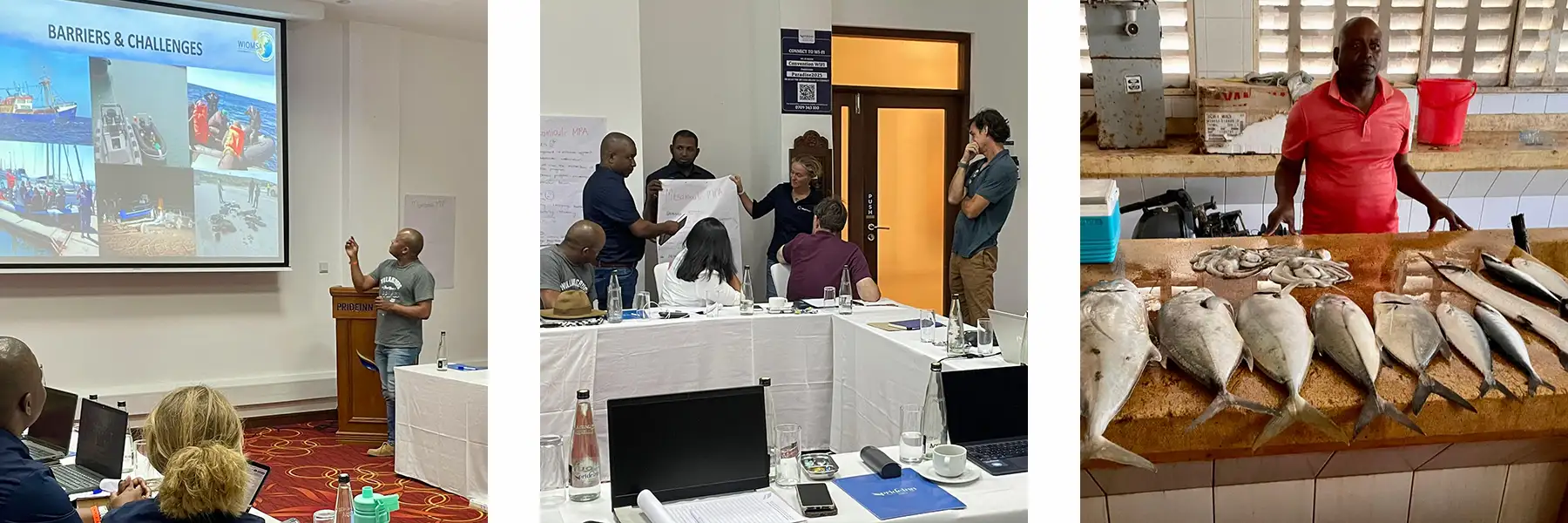
Protecting natural ecosystems, advancing gender equality, and uplifting communities are interconnected goals – and lasting solutions demand that we address challenges through multiple lenses.
In 2025, the Hifadhi Blu Programme launched a major new initiative: the Gender Action Plan (2025-2029), a first-of-its-kind resource designed to embed gender equity and actively promote the participation of women, youth, and marginalised groups in ocean conservation across the Western Indian Ocean.
As a practical, flexible and adaptive model for inclusive marine governance, the Gender Action Plan integrates gender-responsive, community-rooted practices that support more just and sustainable ocean governance.
This new resource, developed by gender expert Dr Buhle Francis, has the potential to be applied globally, helping to build more inclusive, equitable and resilient approaches to marine governance across all waters.
Eliminating cervical cancer in the Western Pacific
In 2023, the Australian government launched a national plan to eliminate cervical cancer, an entirely preventable and curable disease, by 2035.
The same is not the case, however, for some of our nearest neighbours in the Indo-Pacific region where cervical cancer is a leading cause of cancer-related burden among women.
The Elimination Partnership in the Indo-Pacific for Cervical Cancer (EPICC), supported jointly by the Department of Foreign Affairs and Trade (DFAT) and Minderoo, draws on Australia’s world-leading cervical cancer expertise in its leadership team to work with partner countries across the Pacific and Southeast Asia to implement sustainable cervical cancer elimination strategies.
The EPICC consortium, led by Professor Karen Canfell AC, expands on the success of the Eliminating Cervical Cancer in the Western Pacific (ECCWP) project, supported by Minderoo since 2021, which piloted the World Health Organisation three-pillar approach of vaccination, screening and treatment to set countries on the pathway to be able to eliminate cervical cancer.
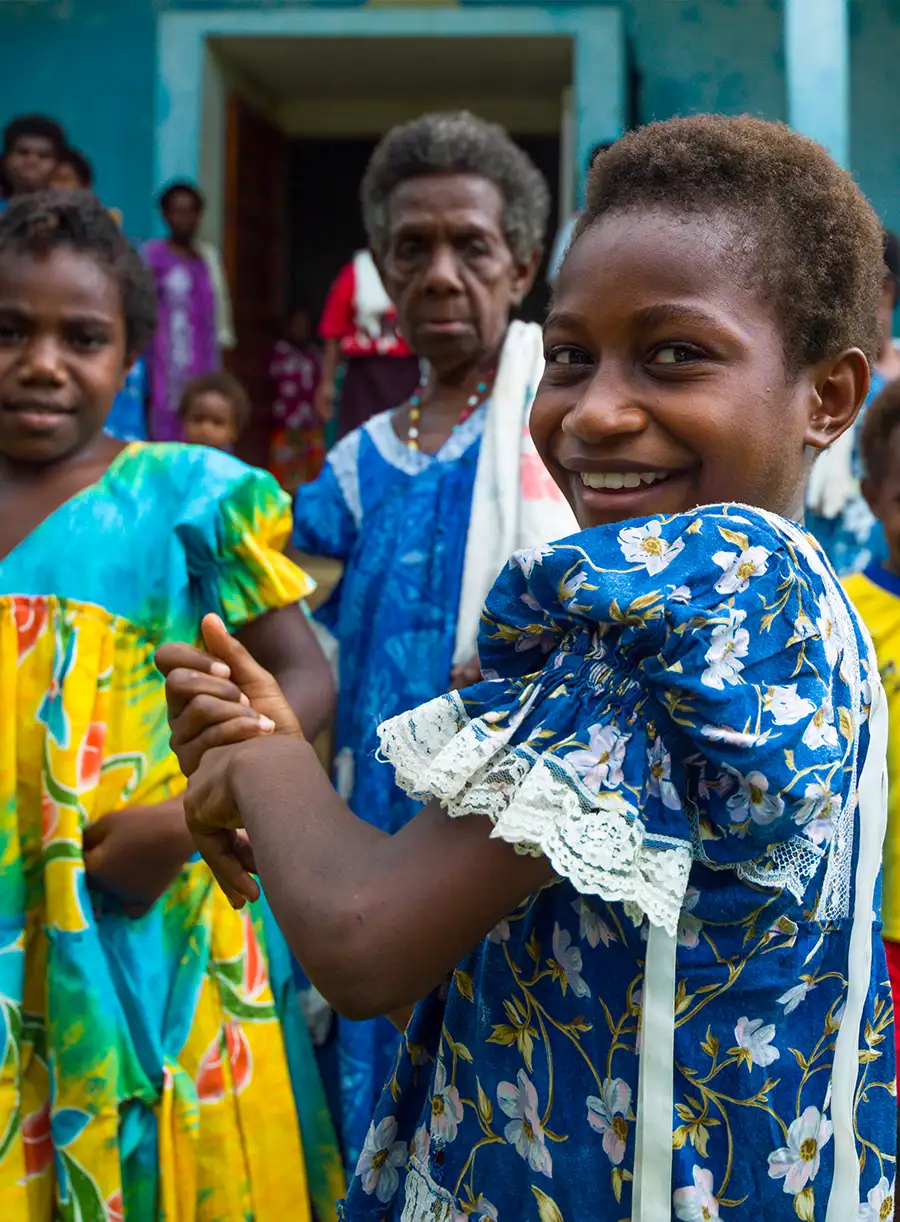
This pilot, undertaken in Vanuatu and the Western Highlands of Papua New Guinea demonstrated initial ‘on-the-ground’ success in strengthening systems for vaccination, establishing primary human papillomavirus (HPV) screening programs, and strengthening linkages and capacity to deliver treatment for preinvasive disease and invasive cervical cancer.
EPICC is now focused on further scaling and sustainability – establishing new national elimination initiatives in a range of countries, and supporting governments to sustain the program for future generations. This will improve the health and lives of hundreds of thousands of women and girls in our region, and will also have a far broader societal impact in terms of supporting women's contributions to the workforce and society.
Caption: Ni-Vanuatu people from Malampa Province, Malekula Island, Vanuatu. Credit: Eric Lafforgue / Art in All of Us / Corbis via Getty Images.
Other stories of impact
We collaborate with partners, communities and beneficiaries to develop, test, refine and de-risk solutions. Discover the insights and innovations driving our impact.

Partner
We support partners using the full spectrum of funding solutions, from grants to impact investing, to create, accelerate and scale measurable impact.
Advocate
We affect system change at scale by shifting the expectations of decision-makers to act on our chosen issues by enhancing advocacy capacity and shifting attitudes, norms, mindsets and behaviours to support critical policy reform.
Generate evidence
We generate, connect and leverage evidence to drive change, fuel advocacy, guide decisions and amplify our collective impact.